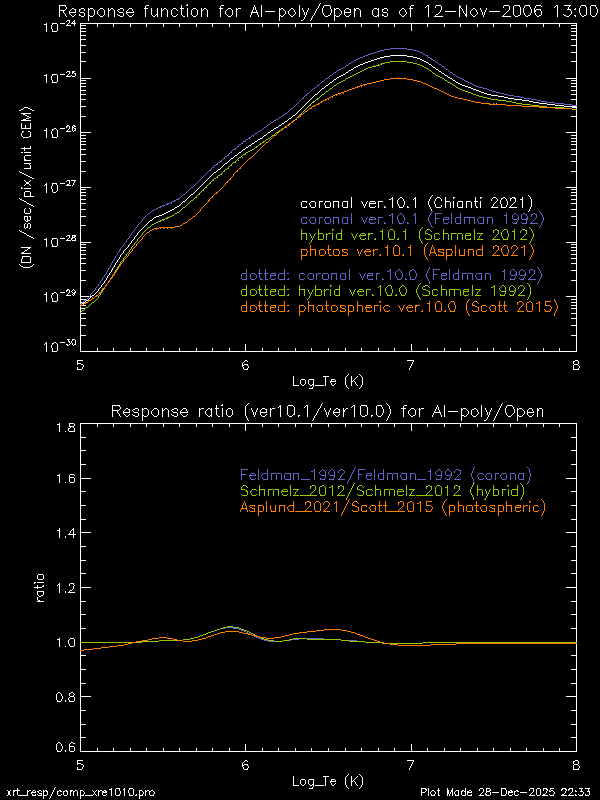
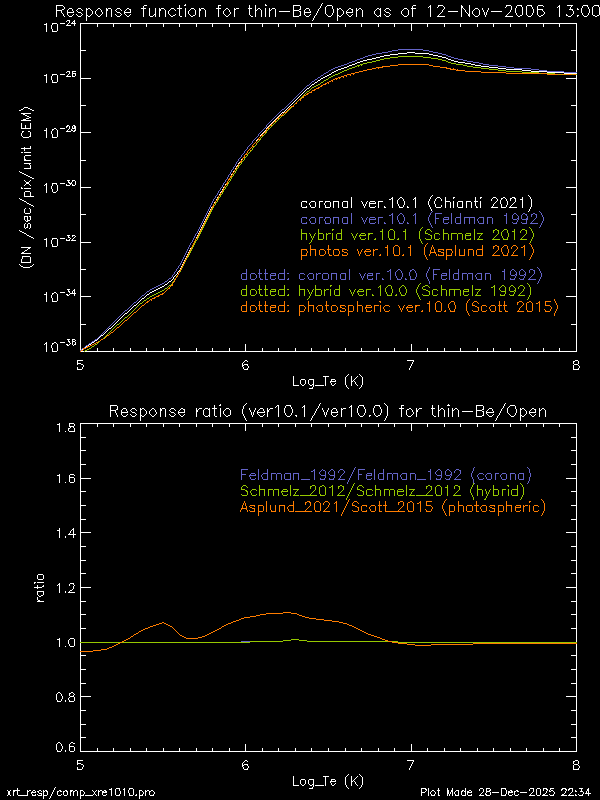
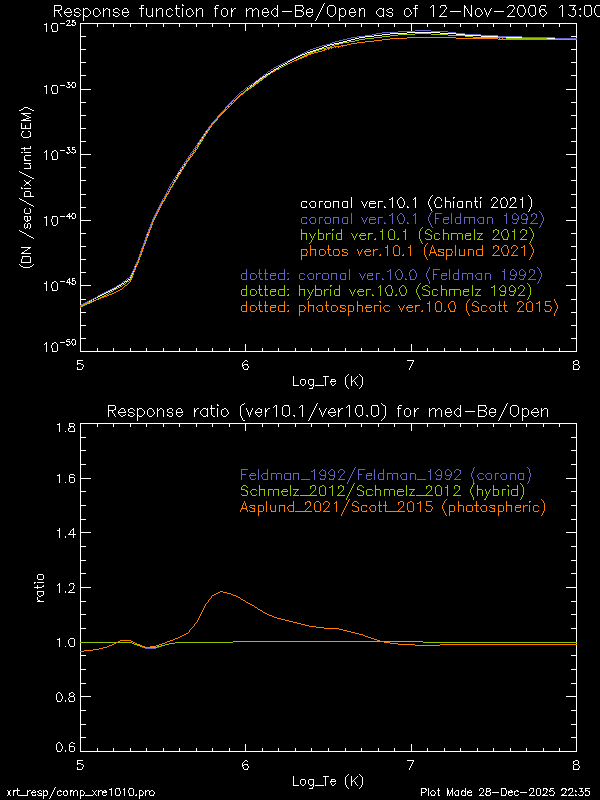
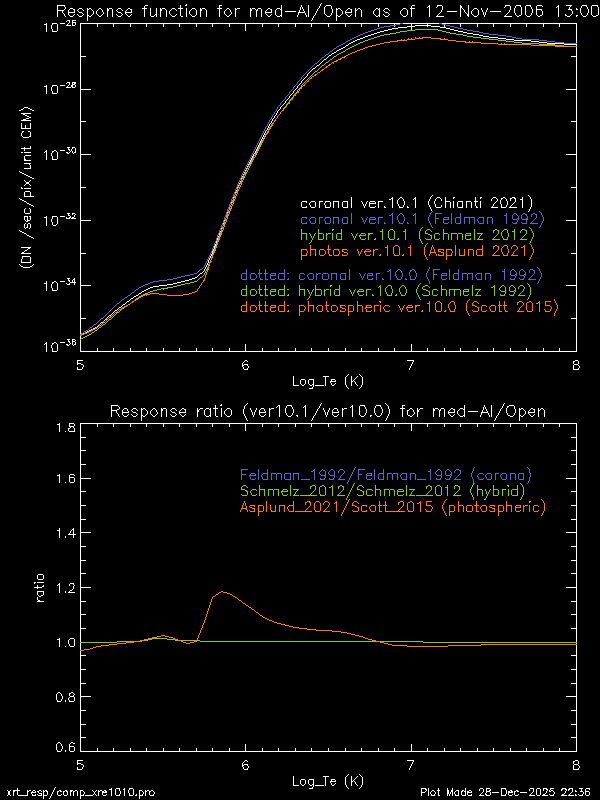
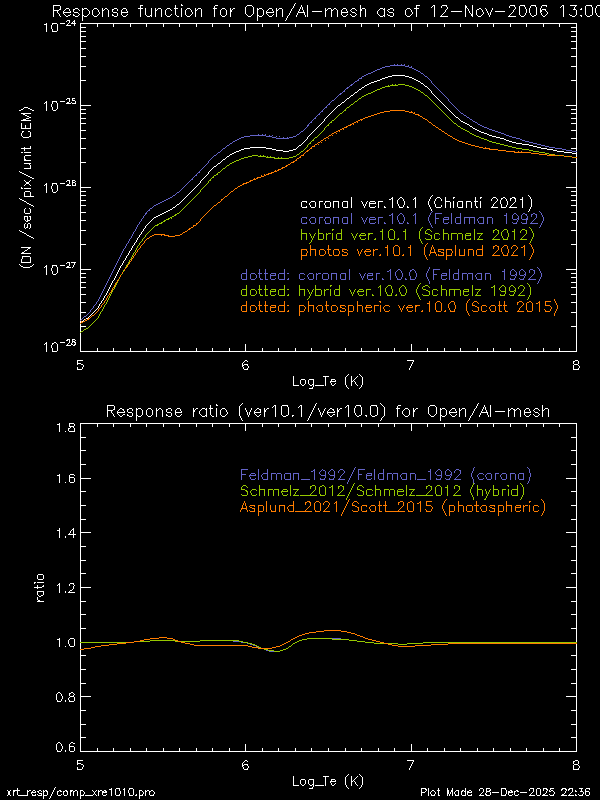
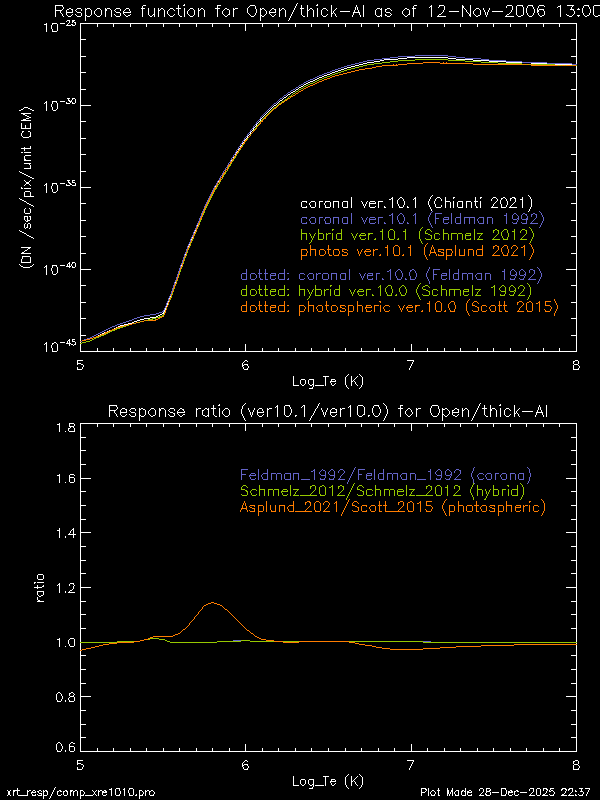
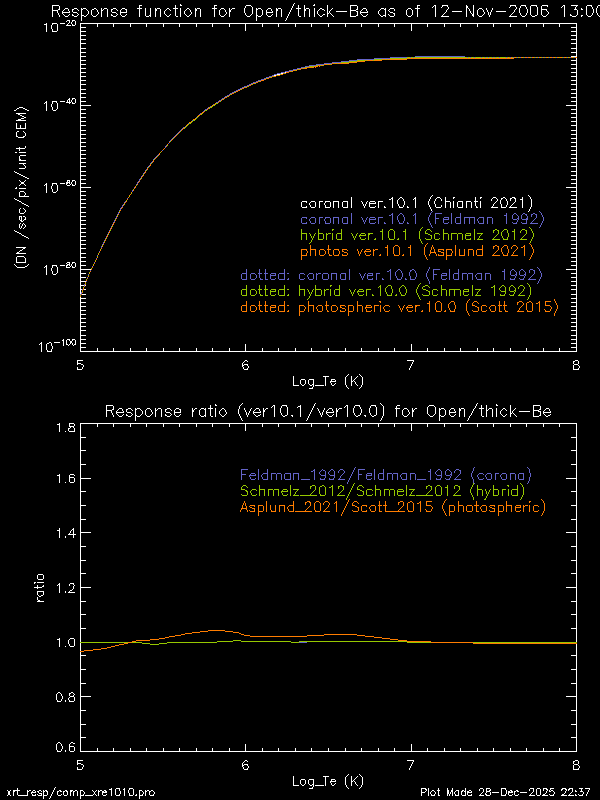
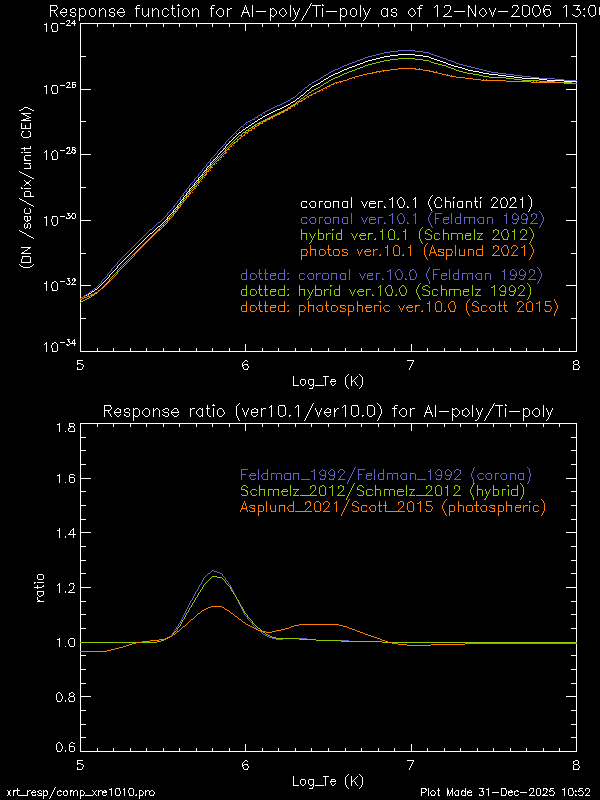
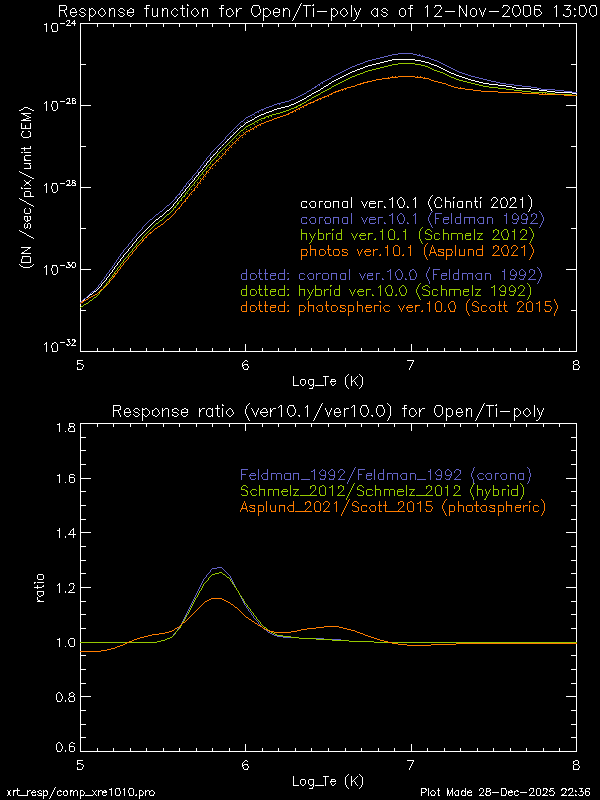
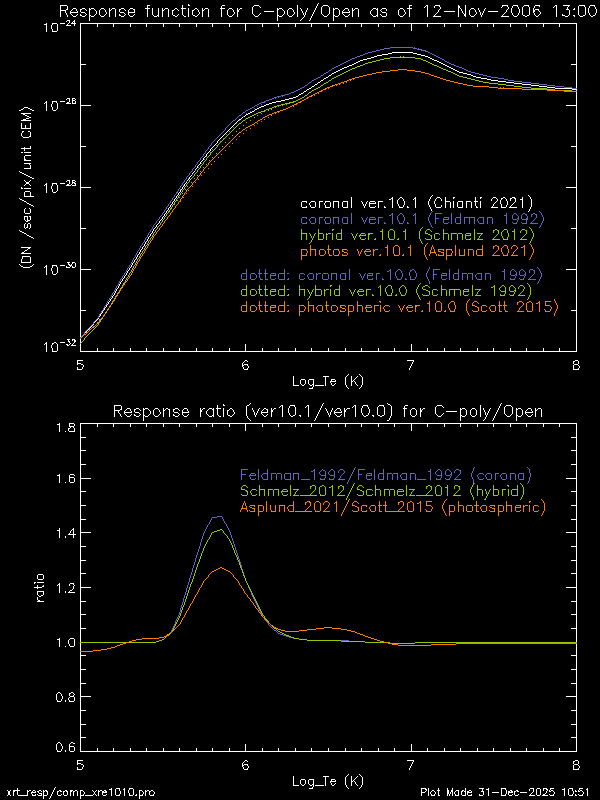
The XRT temperature response functions were recalculated, in response to the release of new Chianti atomic database version 10.1 in Jun-2023. The new atomic database (Chianti 10.1) introduces a new elemental abundance file, sun_coronal_2021_chianti.abund. This file is explained as FIP bias were applied on the most recent photospheric abandance. Changes from the abundance were studied here by R. Fleming.
quick review on the XRT temperature response basics.
[NOTE] The more generalized function, XRT_FLUX_CH.PRO was developed to calculate the flux with the most recent solar spectral data. This function uses the most recent solar spectrum by default, and can also use the older versions by specifying in the keyword. See the program header about how to use (e.g., $SSW/hinode/xrt/idl/response/xrt_flux_ch.pro).
[ Example of calculating XRT response functions ]
For details, see the description of
http://solar.physics.montana.edu/HINODE/XRT/xrt_ssw/xrt_flux1010.pro.
IDL> tim='1-may-2017 00:00'                ; change as needed.
IDL> f1=0 & f2=2                            ; for Open/Ti-poly
IDL> logte = 5.+findgen(61)*0.05            ; prepare a temperature array
IDL> flux = xrt_flux1010(logte, f1,f2,  tim, /corona)
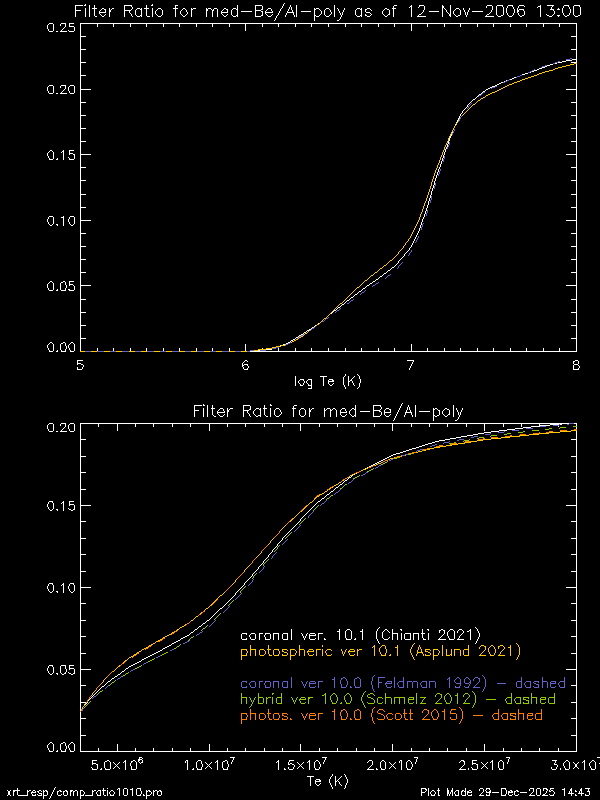
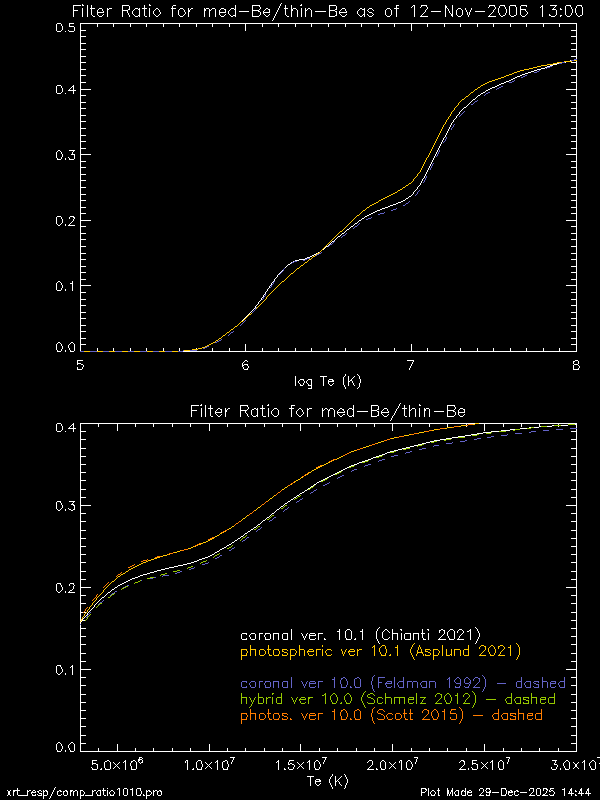
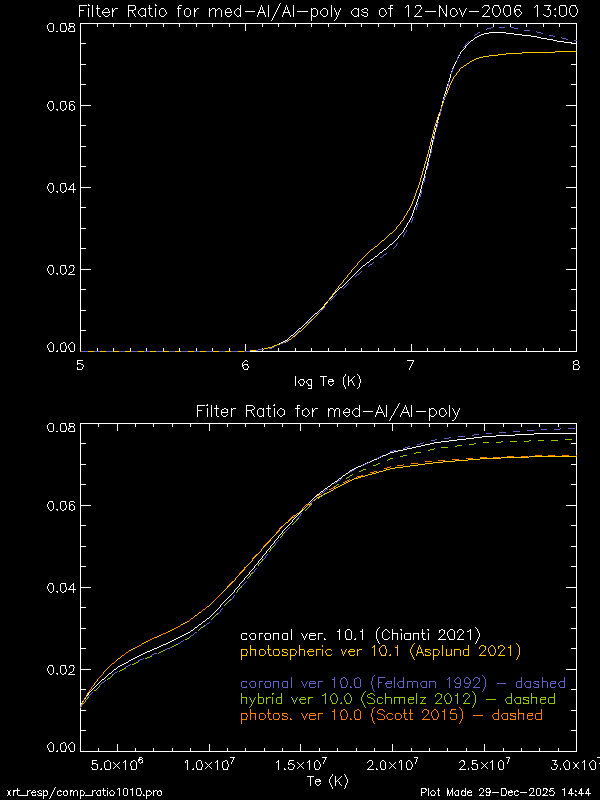
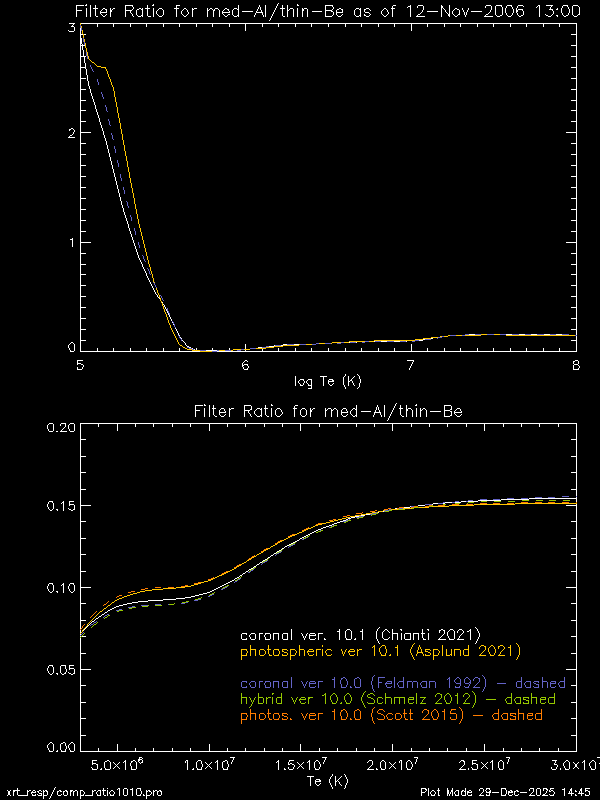
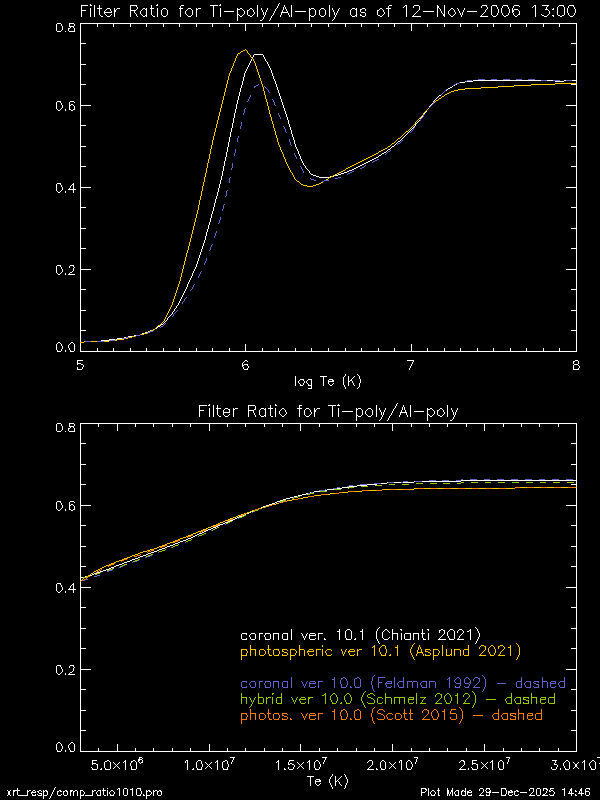
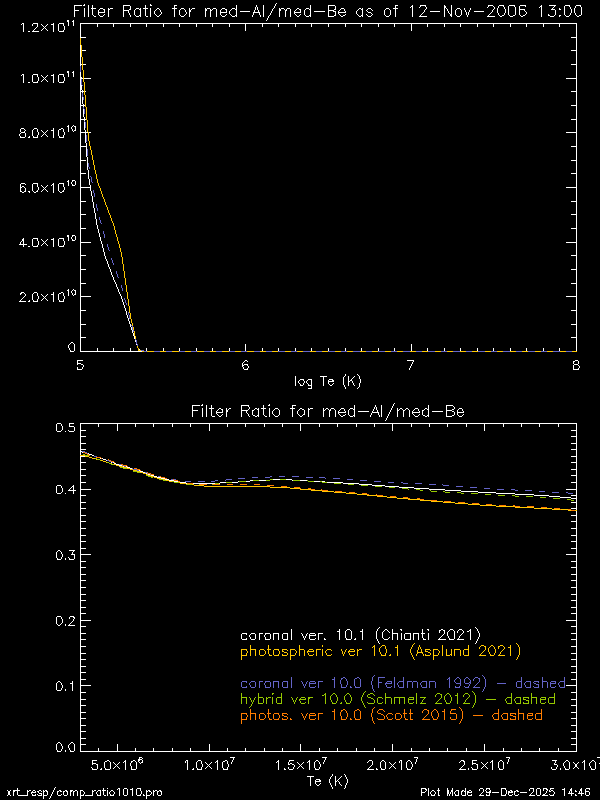
Below are the response functions of all the X-ray analysis filters available at XRT. It is known that the contamination accumulated on the CCD modifies the XRT response functions. As the amount of contamination varies with time, response functions are time-dependant. For the later convenience of analysis, the following response functions were calculated for the contamination level as of 12-Nov-2006.
(Click each plot to show details)
| Al-poly/Open | thin-Be/Open | med-Be/Open | med-Al/Open |
|
|
|
|
|
| Open/Al-mesh | Open/thick-Al | Open/thick-Be | Al-poly/Ti-poly |
|
|
|
|
|
| Open/Ti-poly | Open/C-poly | ||
|
|
|
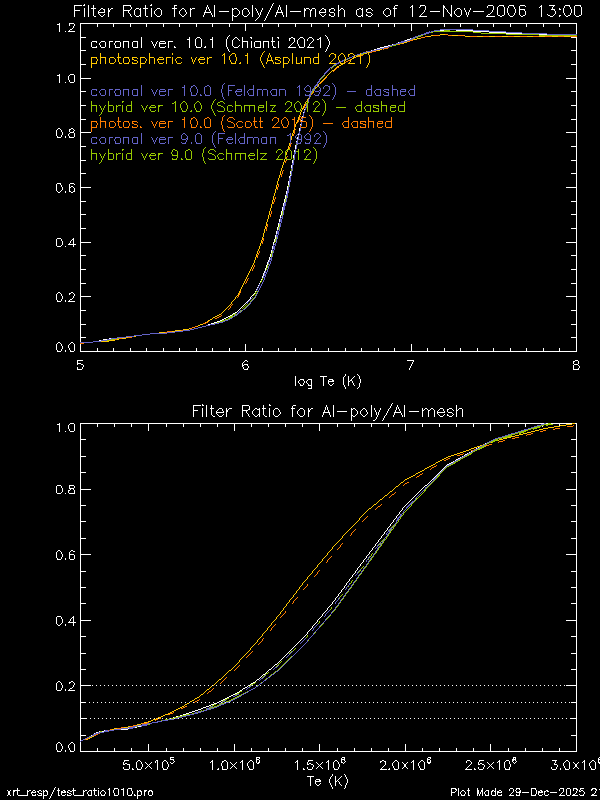
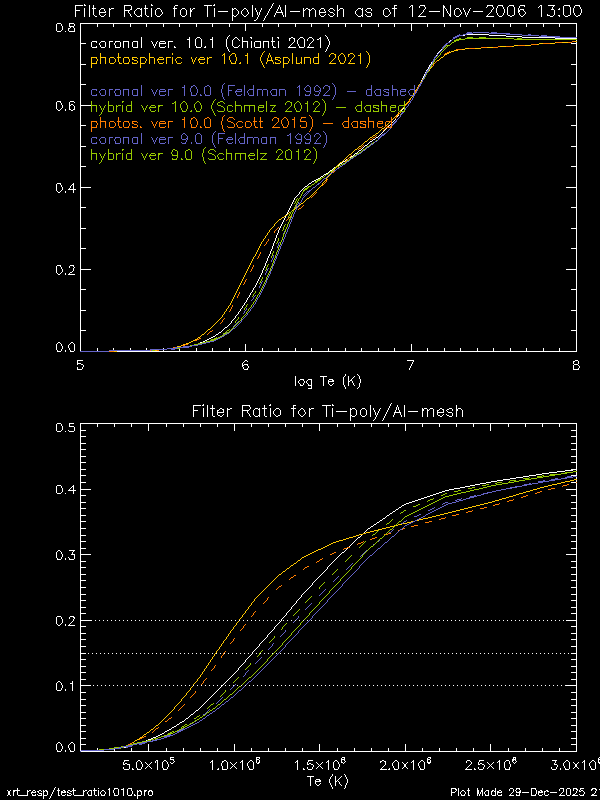
(click each plot to show detailed info)
| Al-poly/Al-mesh (more) | Ti-poly/Al-mesh (more) | thin-Be/Al-mesh | thin-Be/Al-poly |
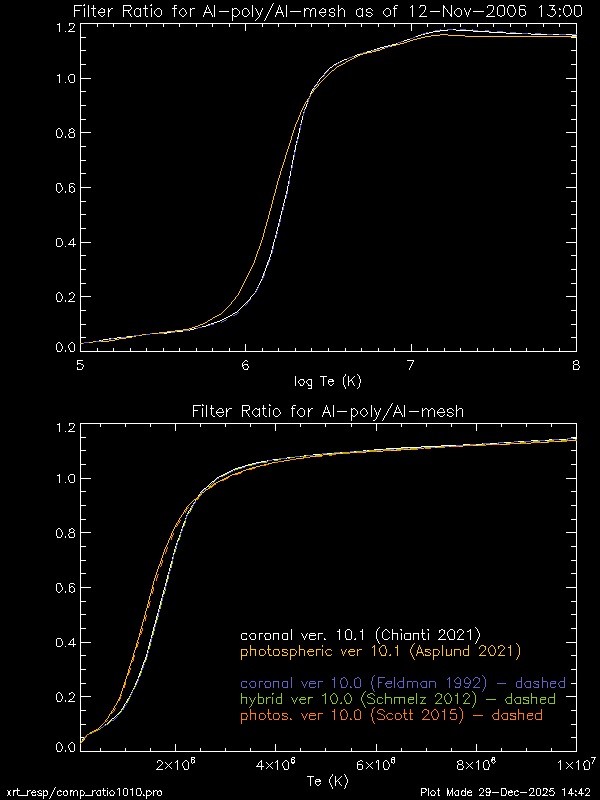 |
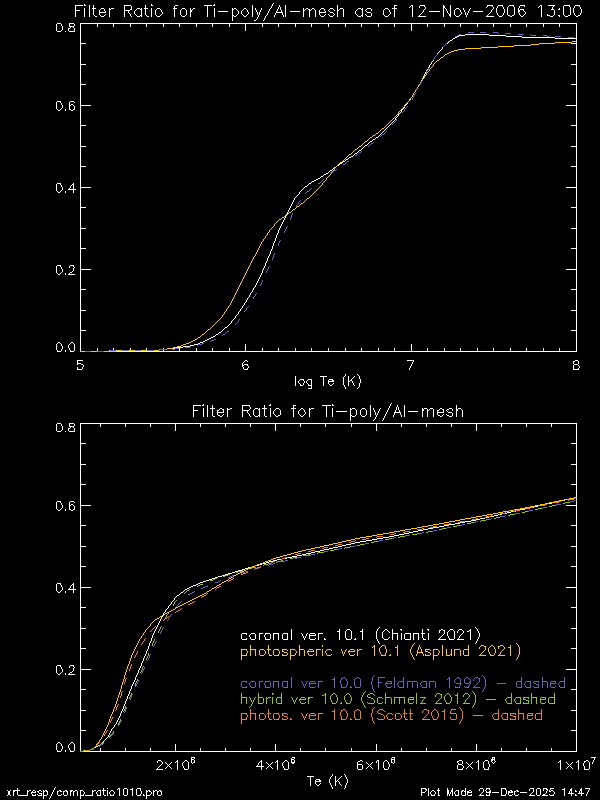 |
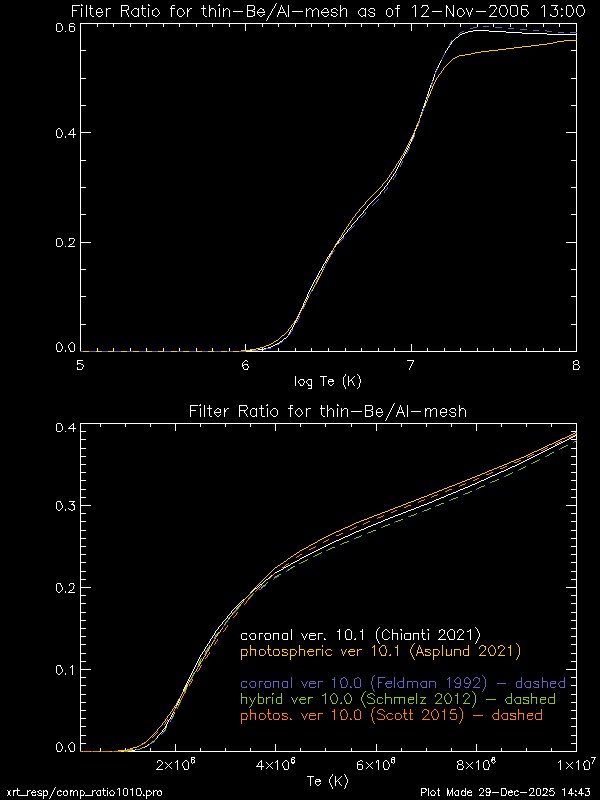 |
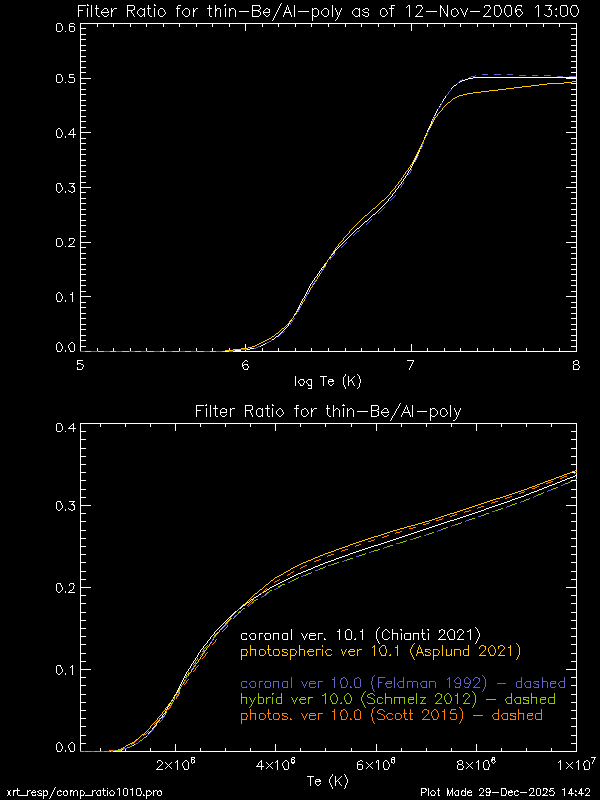 |
| med-Be/Al-poly | med-Be/thin-Be | med-Al/Al-poly | med-Al/thin-Be (NG?) |
 |
 |
 |
 |
| thick-Al/med-Al | thick-Be/med-Be | thick-Be/med-Al | thick-Be/thick-Al |
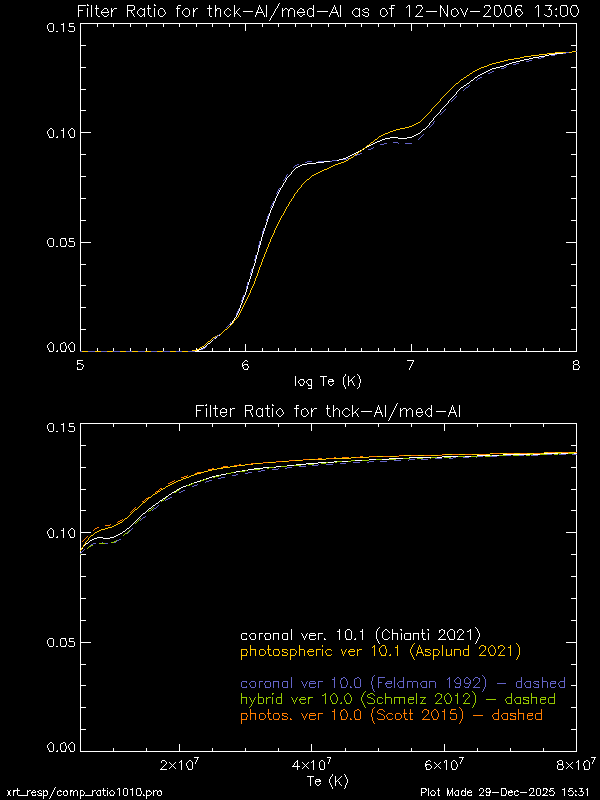 |
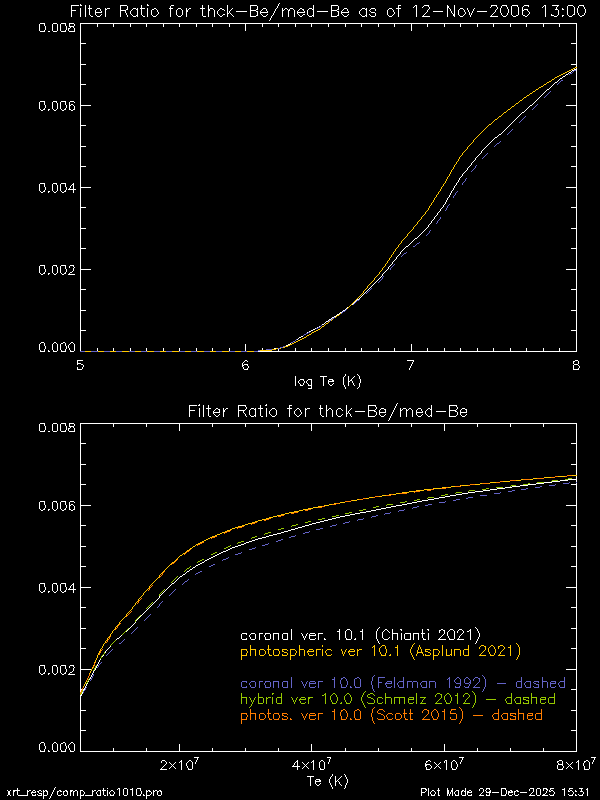 |
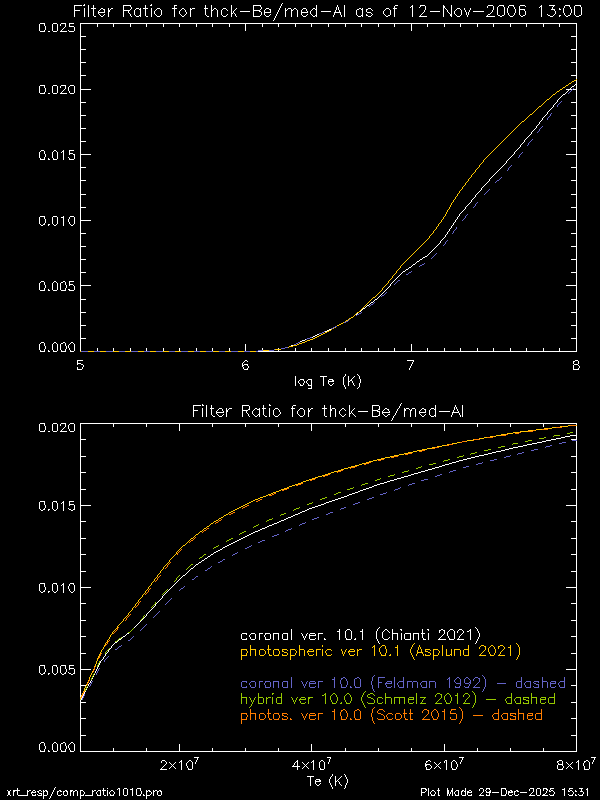 |
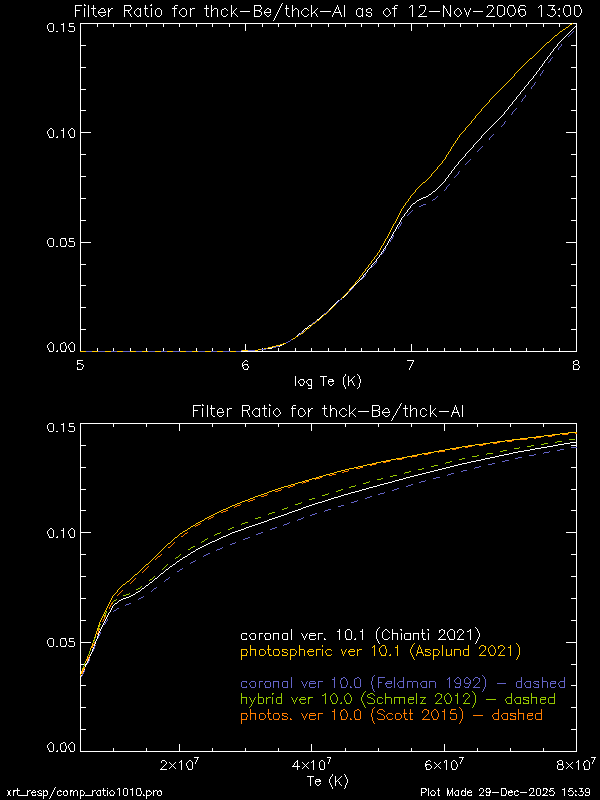 |
| Ti-poly/Al-poly (NG pair) | med-Al/med-Be (NG pair) | ||
 |
 |
IDL> XRT_TEEM_CH1010, index1,data1,index2,data2,te,em, /corona       ; reads solspec_ch1010_cr2021chianti_chianti.genx
IDL> XRT_TEEM_CH1010, index1,data1,index2,data2,te,em, /photospheric ; reads solspec_ch1010_ph2021asplund_chianti.genx
IDL> XRT_TEEM_CH1010, index1,data1,index2,data2,te,em, /hybrid       ; reads solspec_ch1010_cr2012schmelz_chianti.genx
IDL> XRT_TEEM_CH1010, index1,data1,index2,data2,te,em, /cr1992       ; reads solspec_ch1010_cr1992feldman_chianti.genx
IDL> XRT_TEEM_CH1010, index1,data1,index2,data2,te,em, solar_spectrum='./solar_spectrum/solspec_ch1010_ph2015scott_chianti.genx'
[NOTE] The more generalized function, XRT_TEEM_CH.PRO was developed to calculate the flux with the most recent solar spectral data. This function uses the most recent solar spectrum by default, and can also use the older versions by specifying in the keyword. See the program header for how to use (e.g., $SSW/hinode/xrt/idl/response/xrt_teem_ch.pro).