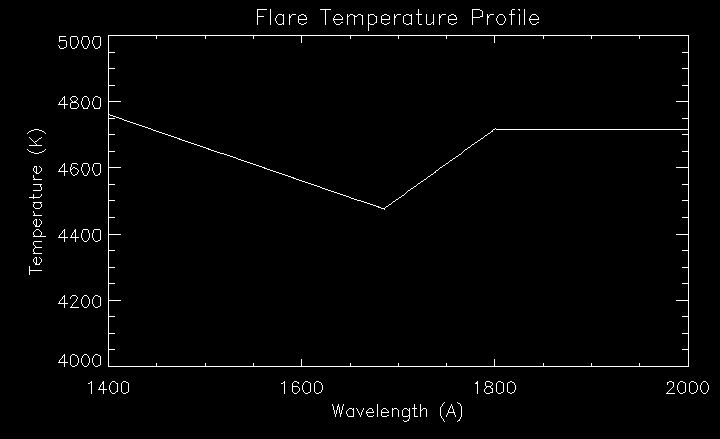
I now turn to the flaring pixels. Using published data, I modeled the flare similarly to the plage, except with the temperature minimum at 1682Å (instead of between 1600 and 1650Å), and a plateau of unknown height from 1400-1500Å.
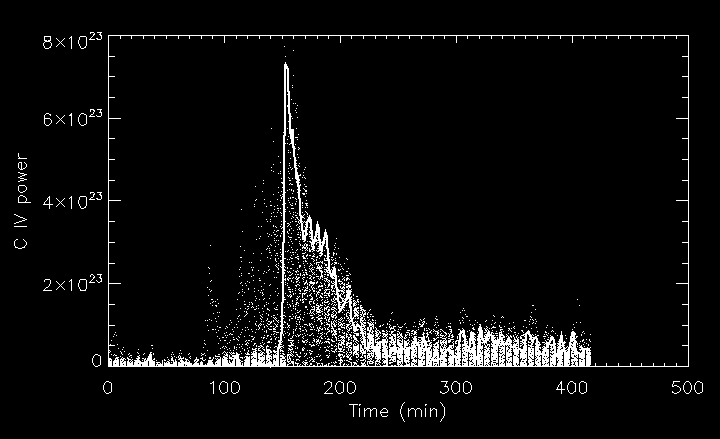
Using a formula from a paper by Phillips, Bromage and Doyle, I was then able to calculate the C IV power from the 1700Å data, as this band does not include the plateau.
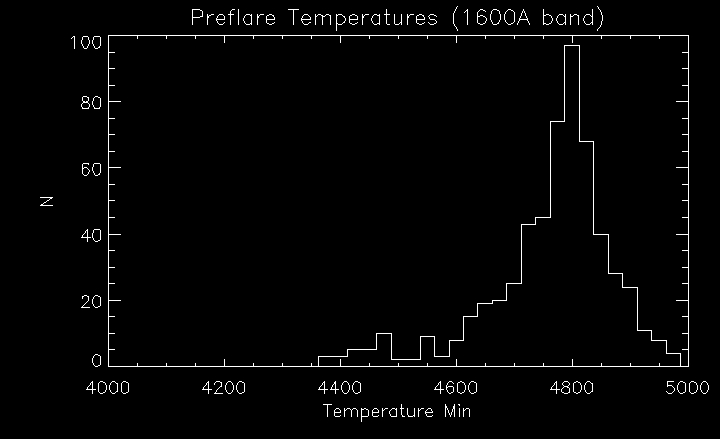
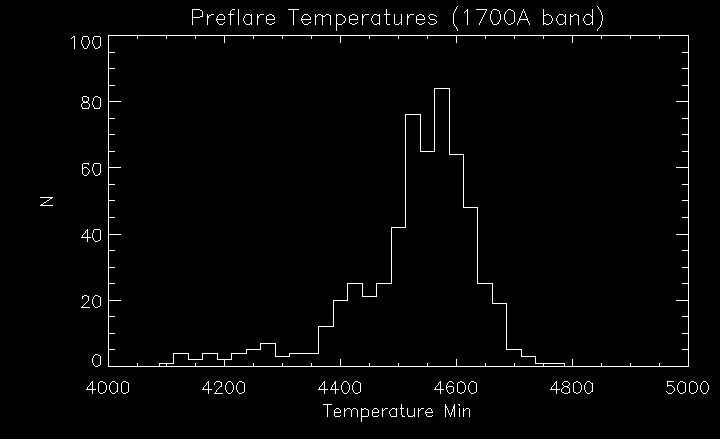
The pre-flare temperatures:
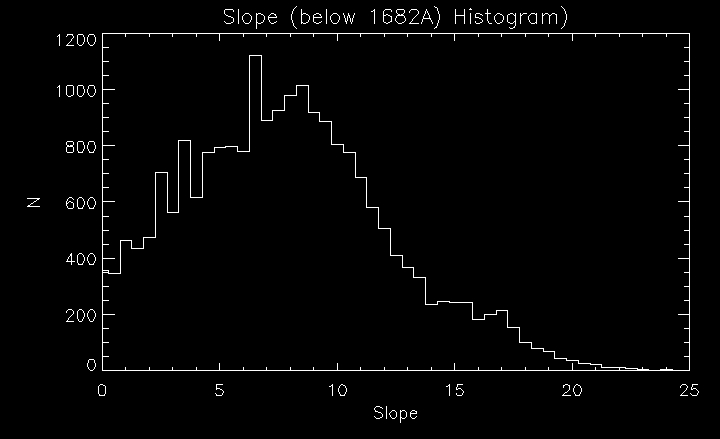
Histogram of slopes:
This gives the following histogram for the expected contribution to the 1600 band data:
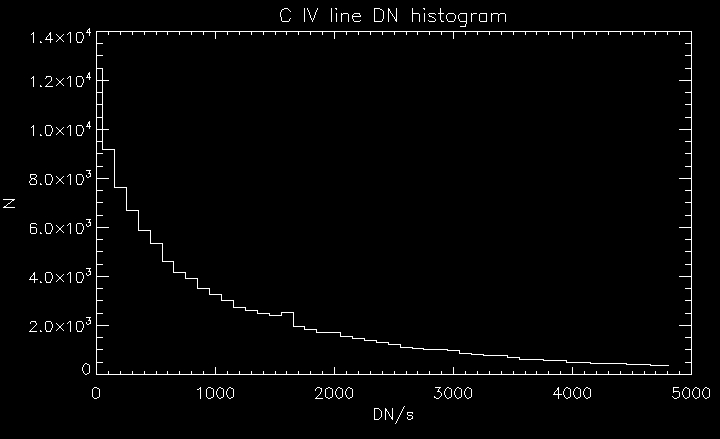
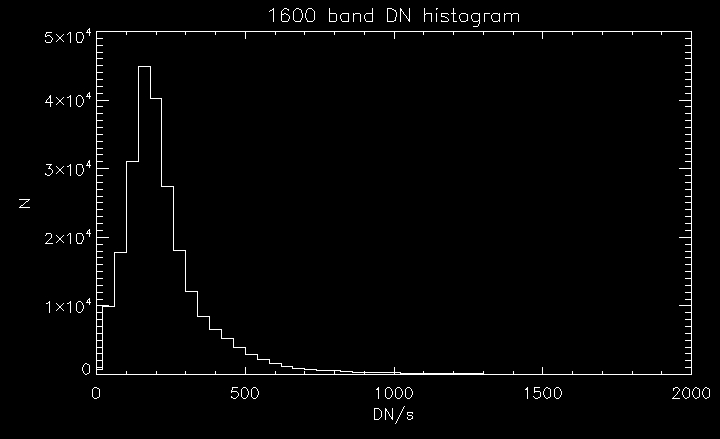
The histogram for the total data from the 1600 instrument:
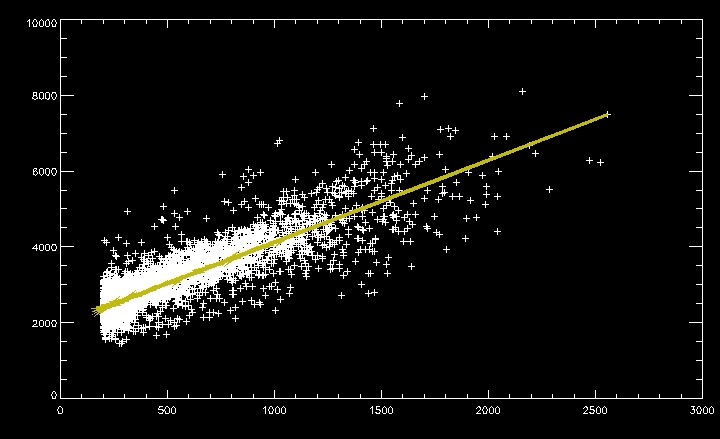
Now, I calculate the portion of the emission that is above the pre-flare continuum The added 1600 is on the x-axis, the added 1700 is on the y-axis. This graph only includes data points for which the added 1600 emission is above 200 DN/s. This graph is based on the temperature from the 1700 band only: Slope:2.166 (reciprocal: 0.461)
Now with the temperature calculate for each band individually: Slope:2.039 (reciprocal: 0.490)
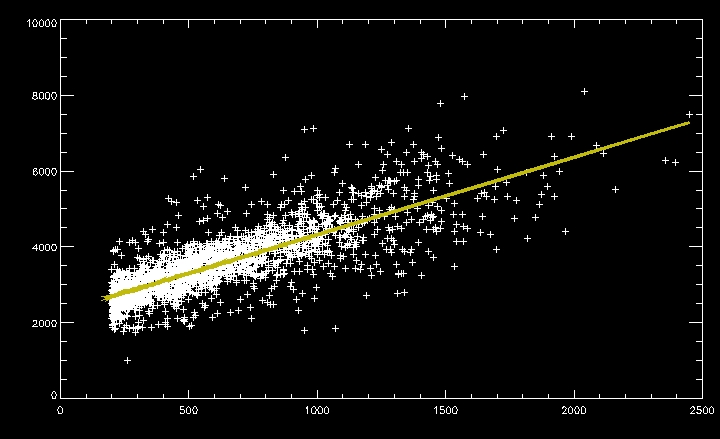
These graphs give the same values for the 1700 emission - the only difference is in how
the 1600 emission is calculated. The difference between the 1600 data for the two graphs is
shown below. Note that for each flaring event, there was only one value, which was the difference
between the temperature calculated from the 1700 band and the 1600 band. The graph is a histogram
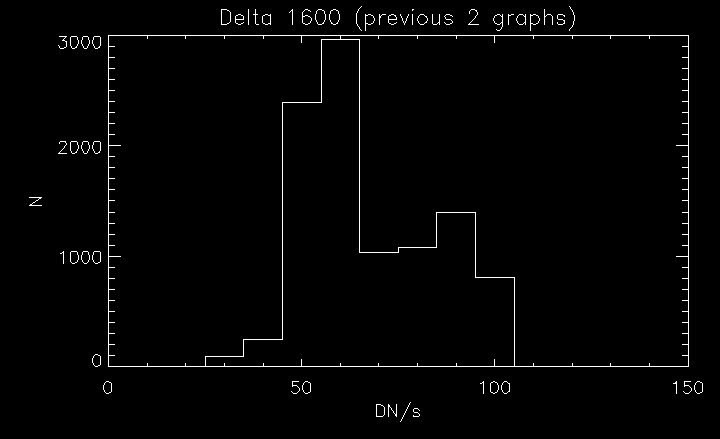
of the data: