|
Icon
|
Project type and supervisor
|
Project title and brief description
(Click title for details) |
|
Data analysis with
Rachael Filwett
|
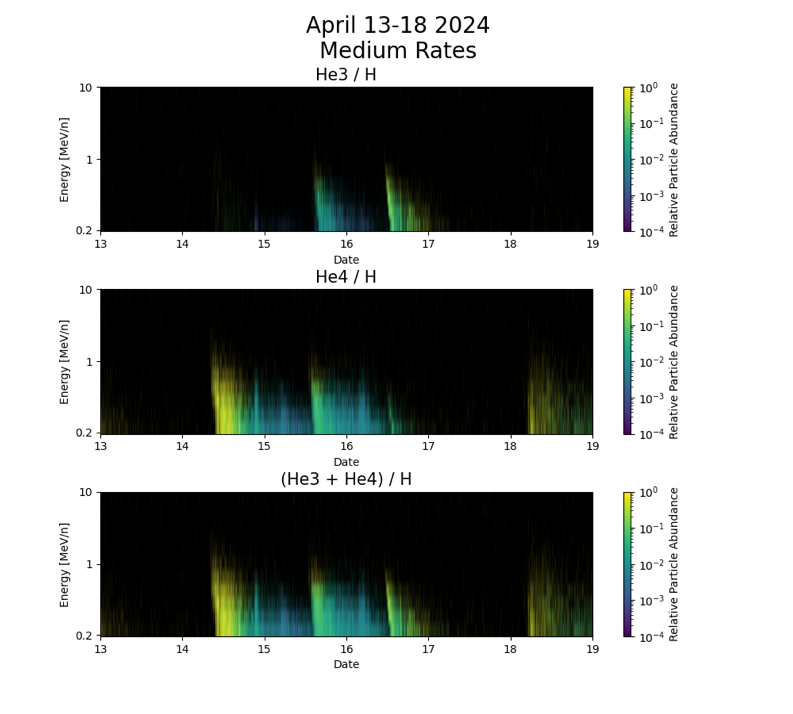
Heavy Ion Abundance Evolution of Solar Energetic Particles Measured by Solar Orbiter
Solar Energetic Partciles (SEPs) affect the space weather. During SEP events, heavy ions have been detected. In this project,
student will analyze SEPs observed by spacecraft Solar Orbitor and determine the variation of the abundance of heavy ions
to probe their origin.
|
|
Data analysis with
Anne Lohfink
|
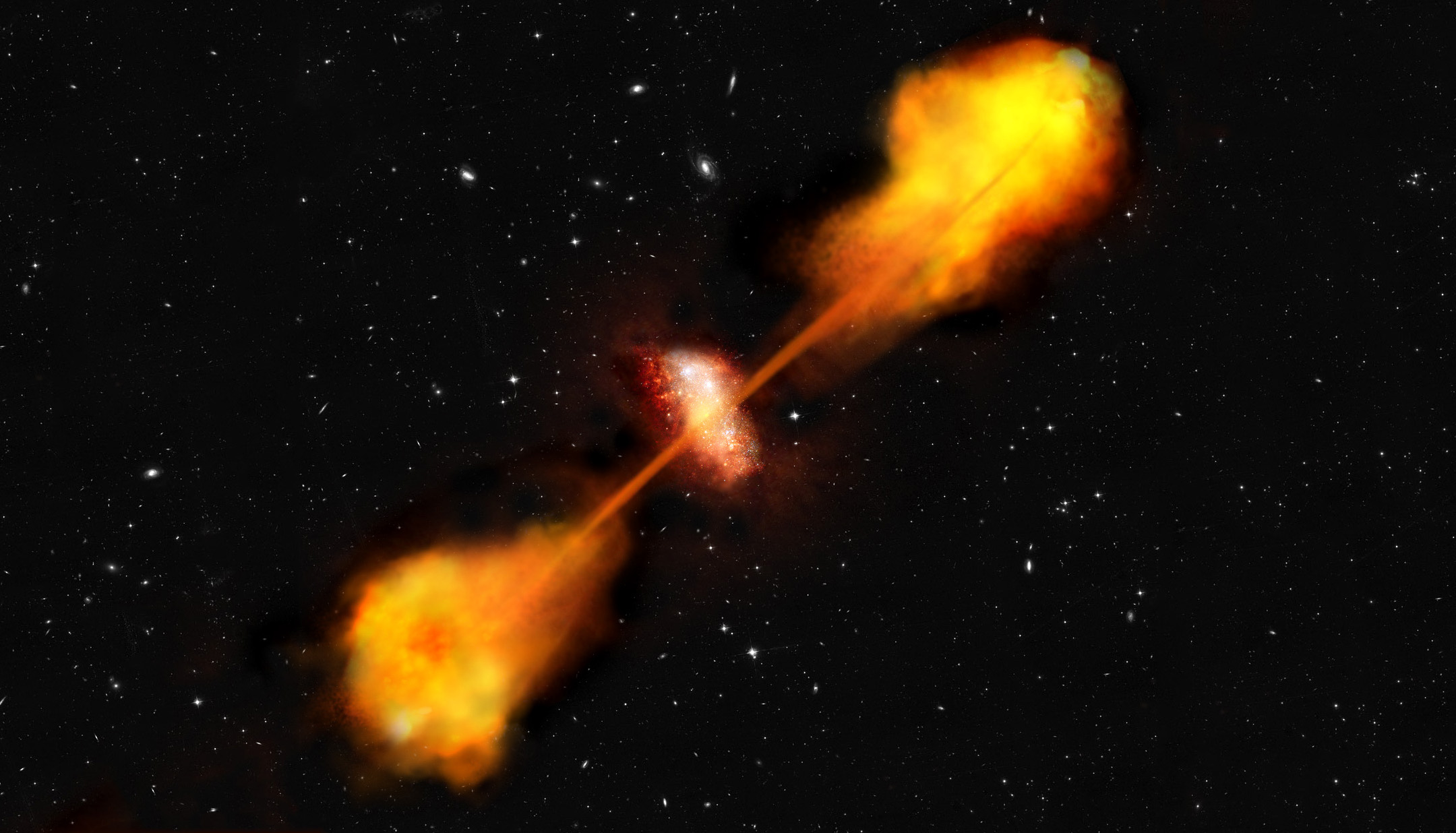
X-ray Spectral Analysis of an Accreting Supermassive Black Hole in an Active Galactic Nucleus
This project introduces students to high-energy astrophysics through the analysis of X-ray
spectra from an active galactic nucleus (AGN). The student will use archival observations from
major X-ray observatories to investigate the physical processes occurring near an accreting
supermassive black hole. Results from the project will help improve our understanding of how energy
is generated and released in AGN environments. Note that this project is by far over-subscribed! Please consider
other projects.
|
|
Data analysis and modeling with
Dana Longcope
|
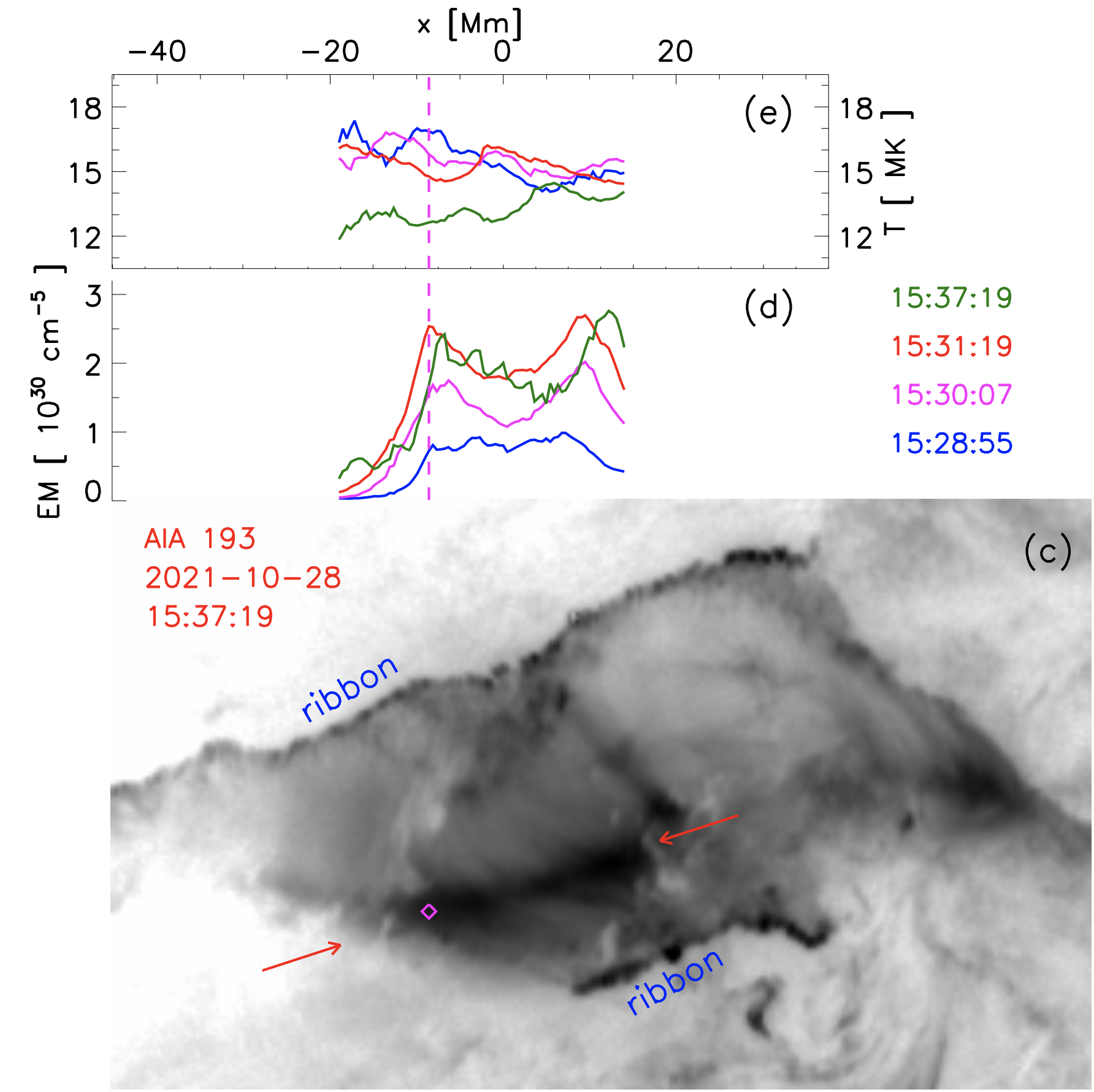
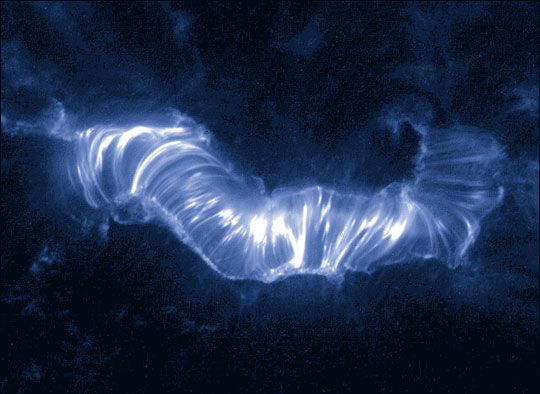
Studying the Hot Dense Plasma Ridge Produced by a Solar Flare
A solar flare is a dramatic and sudden release of magnetic energy, which can heat plasmas in the corona to 10 million Kelvin.
In this project, we will analyze and model a hot dense plasma structure called hot ridge, observed by NASA's spacecraft,
and investigate how it is formed at the base of a current sheet across which magnetic reconnection occurs during the flare.
|

|
Data analysis and modeling with
Jiong Qiu
|
Why is the Flare Corona so Bright for so Long?
A solar flare releases a large amount of magnetic energy into structures called post-reconnection flare loops (PRFLs),
producing abundant X-ray and extreme-ultraviolet emissions in these loops. For decades, it has not been understood
why these loops remain bright for much longer time than expected. In this project, we analyze and
model heating and cooling of thousands of flare loops, observed by NASA's Solar Dynamics Observatory, to test several
hypotheses attempted to explain the longstanding slow-cooling problem.
|
|
Data analysis with
Sarah Riley
|
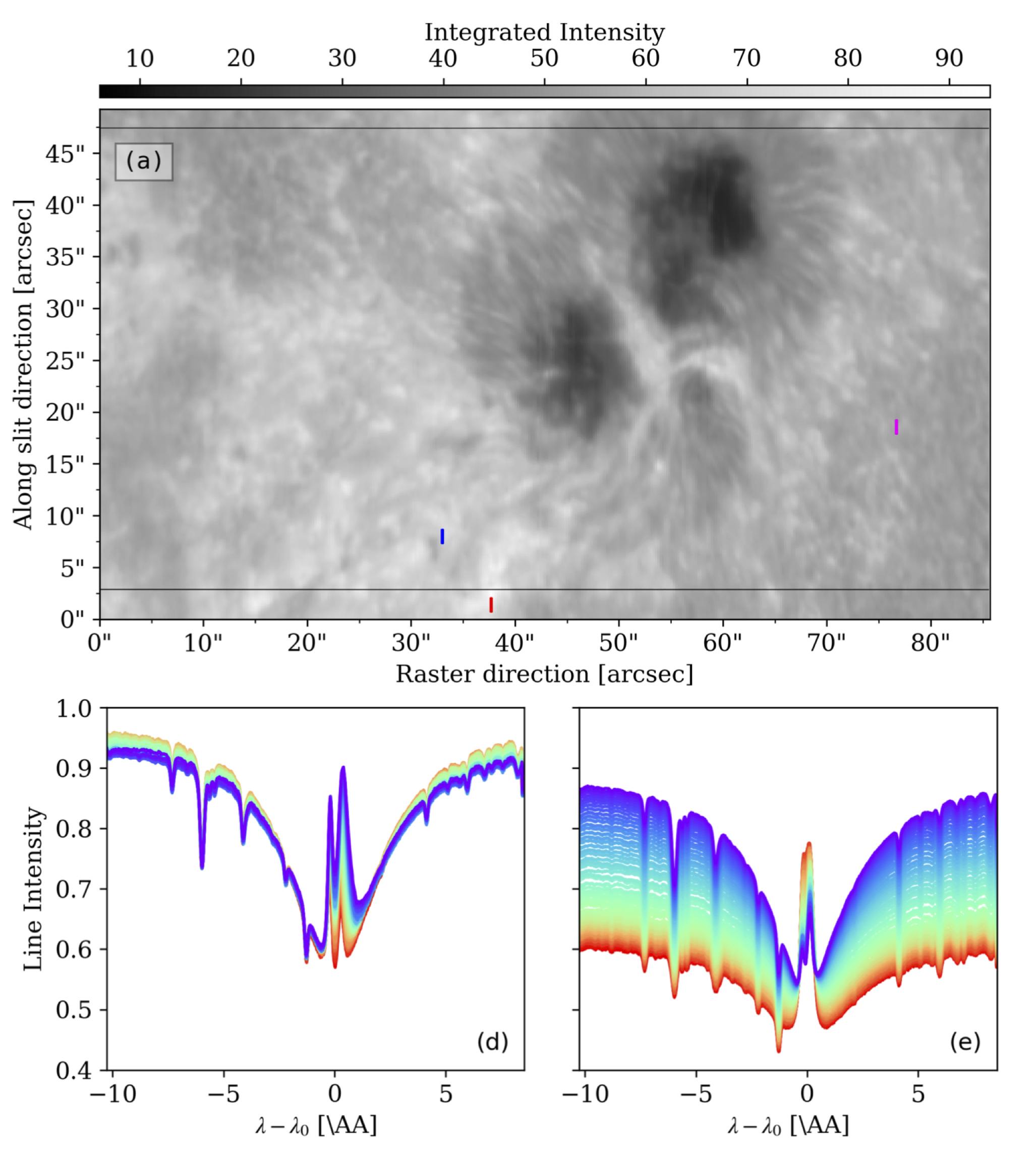
Spectral Evolution of Flare Heating at High Resolution
During a solar flare, energy is deposited in the chromosphere impulsively. As a result, a large host of atomic lines
formed there exhibit dynamic signatures such as enhanced line emission, line shift, and line asymmetry.
In this project, we will analyze chromosphere spectra obtained by DKIST, the world's largest solar telescope, with a k-means
clustering algorithm to characterize dynamic signatures of flare-heated chromosphere on unprecdented spatial scales, which
can inform us of mechanisms of flare heating.
|
|
Modeling with
Roger Scott
|
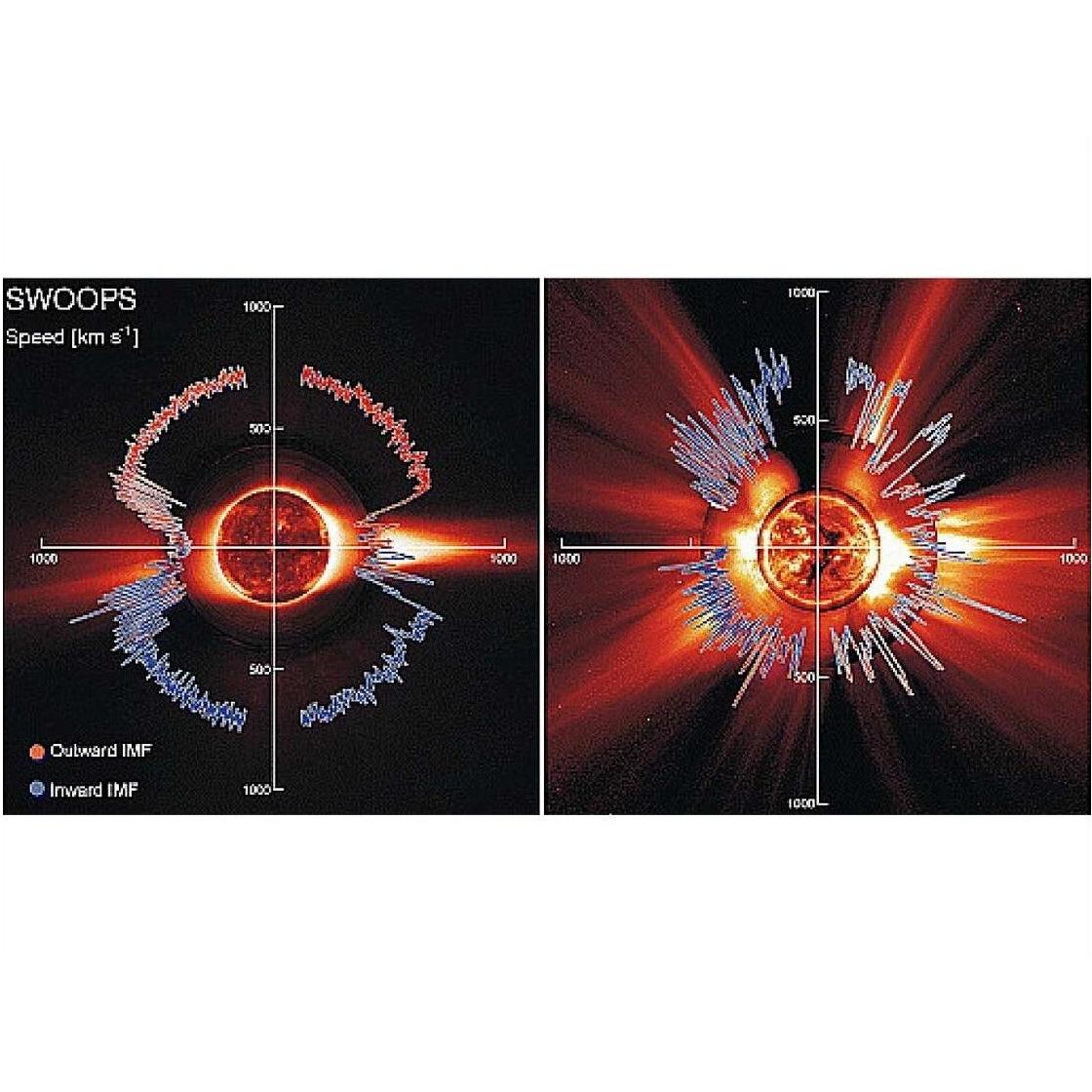
Exploring the Structure of the Solar Wind as an Initial Value Problem
In this project we will explore a new technique for constructing solutions to the equations that describe the solar wind as an initial value problem in order to better understand the dependence of the solar wind on the structure of the Sun's magnetic field and the conditions at the base of the corona.
|

|
Data analysis with
Aki Takeda
|
Exploring Relationship between Solar X-ray Irradiance and Magnetic Flux
Our Sun is a G type star with the surface temperature at around 6000(K),
but its thin atmosphere called corona is known to be more than 300 times
hotter than the surface. The heating mechanism of the corona above the
cooler surface is not fully understood, but the magnetic flux penetrating
the surface from Sun's interior is believed to play a crucial role.
This project explores the possible heating mechanism by closely comparing
the brightness of the corona (measured as soft X-ray intensity) with the
magnetic field strength (obtained from spectral information of visible
light) underneath.
|

|
Modeling with
Hang Yu
|
Constructing Efficient Gravitational Wave Templates of Binary Neutron Stars With Machine Learning
Binary neutron stars (BNSs) are crucial sources for gravitational wave observations. To detect a BNS, millions of
theoretical waveform templates are required. In this project, we will explore using machine learning techniques to
generate efficient surrogate models that allows analysis of BNSs.
|
|
Data analysis with
Chunming Zhu
|
Flare Ribbon Evolution During Solar Eruptions
Solar flares are among the most powerful events in our solar system. During flares, the accelerated particles deposite their
energy in the chromosphere, forming two evolving ribbons. In this project, we will study the evolution of flare ribbons to
understand the energy release process in solar flares.
|