RESTORATION AND INTERPRETATION OF THE IMAGES OF YOHKOH SOFT X-RAY TELESCOPE
ABSTRACT
According to the finite width of the point spread function (PSF) of the Yohkoh SXT mirror, a certain amount of blurring effect is inevitable in the observed soft X-ray images. Thus it is necessary to subtract its effect from the observed images for both morphological and photometric purposes. Nevertheless, due to the undersampling effect by a large pixel size of the CCD camera of SXT, the application of general algorithms to the image restoration has always shown unreasonable results for the SXT images. Therefore, we have developed a new method for increasing the sampling density for Yohkoh SXT images under the condition of the photon number conservation inside each pixel. The correction for the undersampling effect was also necessary to obtain a good estimate of the PSF from the ground experimental data. Based on this best-fit PSF, an algorithm of maximum entropy method is applied to the observed SXT images. The restored images show fine details in the coronal loops successfully, but there still remains the problem of insufficient noise suppression.
INTRODUCTION
Since the launch of Yohkoh in 1991, the Soft X-Ray Telescope (SXT) has provided images of the solar corona with unprecedented resolution and time cadence. The SXT coronal images are used not only for morphological studies but also for quantitative studies of spatial distribution and temporal variation of physical parameters (temperature, density, and so on) of various structures and events in the solar corona.
In order to derive physical parameters from SXT images, one has to go through a series of calibration procedures, namely dark frame subtraction, flat fielding, and correction for scattering from surrounding brighter areas. However, even after these procedures, SXT images still do not present sharp enough structures of the solar corona because of the finite resolving power of the telescope. What is recorded by the CCD during the observation is the result of convolution of the real X-ray intensity distribution of the solar corona and the blurring pattern by the telescope mirror. The blurring pattern on the grazing incidence mirror of the SXT, the point spread function (PSF), can be described by the Moffat function representing the core portion and the power-law distribution for the scattering wing, respectively (Martens et al. 1995; Hara et al. 1994). Though the level of scattering of the SXT mirror is much reduced compared to the Skylab S-054 telescope, there is no doubt that the convolution blurs the original feature of coronal structures.
Good deconvolution procedures will subtract the blurring effect and in addition suppress noise in the image. Concerning the SXT images, however, the deconvolution procedures are not usually applied. Though there have been some trials of the deconvolution for the SXT images, it seems the results have not been positively accepted by the scientists for some reasons. It is certainly true that, because the PSF of the SXT mirror has a very sharp core and a widely spread wing, the overall feature of the observed images would be very close to the original structures, morphologically. One may therefore think that it is not necessary to correct for the blurring effect nor the noise in the observed images. However, it is indeed a dangerous idea, especially when accurate photometry of coronal features is aimed at. In the following we will argue that the restoration of the observed Yohkoh SXT images should be performed for obtaining correct information on the solar corona, and a method for such image restoration will be presented.
DECONVOLUTION AND UNDERSAMPLING EFFECT
The goal of the image restoration is to recover the original scene from degraded observations. Image restoration techniques are oriented towards modeling the image degradation (blur and noise), and applying an inverse procedure to obtain an approximation of the original scene. Mathematically, a restoration of an image is defined by an inversion of image equation (i.e., a deconvolution to remove the blur), together with a statistical regularization of the noise in the observed image. Numerous algorithms for finding the best solution of the true image have been developed so far. However, as has been shown in the numerical simulation by Shin (1998), the deconvolution of the SXT images is hindered by the undersampling effect included in both the observed images and the PSF. It was known from the ground experiments (Tsuneta et al. 1991; Martens et al. 1995) that the FWHM of the PSF of Yohkoh SXT is only as large as 1 pixel size (2.45 arcsec). Therefore, SXT images are not adequately sampled. Aside from the loss of spatial resolution, it is clear from the simulation (Shin 1998) that it produces a mathematical artefact during the deconvolution, and this kind of artefact acts as a mechanism of producing negative structures in the deconvolved images.
Therefore, without increasing the sampling density of the observed images it will be impossible to restore them in a reasonable way. However, a simple adoption of smoothing kernel in increasing the sampling density must be dangerous because it changes the whole intensity distribution of the observed images in an uncontrolled fashion. In order to perform photometric studies using the SXT images, we believe that the energy distribution (photon counts in the pixels) of an image should not be distorted by any kind of smoothing processes. It is also requested that the restored image should not contain structures with spatial scales much smaller than the CCD pixel size.
In order to remove the undersampling effect from the observed images
under the condition of energy conservation inside each pixel,
a method of variance optimization in/between pixels has been developed
(Shin 1988). The method generates a smooth distribution of intensity by
conserving photon counts in the pixels.
It has been tested on several sample two-dimensional
images, and proved to be successful in increasing the sampling density
of the undersampled images.
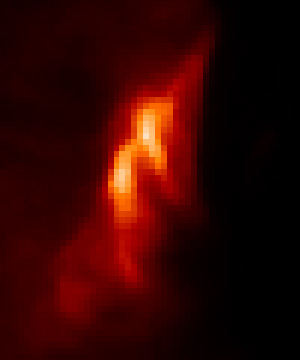
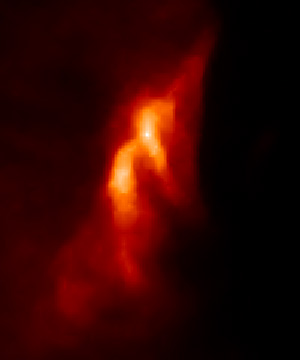
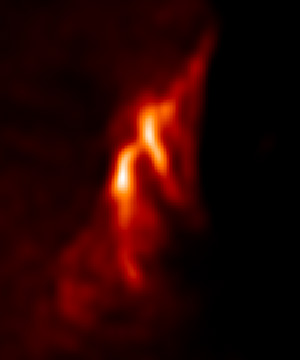
Figure 1 shows a comparison of an observed image
with the images whose sampling density is increased.
The sampling density is increased by dividing each pixel into
4×4 (=16) sub-pixels.
Photon number conservation in each pixel is satisfied among these images.
We found that sub-pixel division beyond 4×4 does not change
the result much in the following deconvolution procedure.
In order to perform deconvolution of the images, the sampling density of the PSF data must be increased at the same time. The experimentally determined shape of the PSF suffers heavily from the undersampling effect, as we may expect from its sharply peaked shape. The result (Sakurai and Shin 1998) shows that the PSF has a shape slightly sharper than that given by Martens et al. (1995), and begins to be smoothly connected to the scattering wing at the distance of about 15 arcsec from the center.
RESTORATION OF YOHKOH SXT IMAGES
In this study, we have adopted a slightly modified form of the maximum entropy method (Agmon et al. 1979; Hollis et al. 1992) for the restoration of the observed SXT images. Our method (Shin 1998) provides an alternative to the conventional procedure which requires the numerical solution of a set of implicit nonlinear equations for the Lagrange multipliers. In our method the solution is determined by seeking a minimum of a concave function, a procedure which readily lends itself to computational work.
The right-most image of Figure 1 shows the result of deconvolution starting from the densely-resampled SXT image which is shown in the middle panel. Fine details of a coronal loop structure is clearly seen. Due to the deconvolution, X-ray intensity at the brightest peaks is increased by about 20%. The largest difference between the raw and the deconvolved X-ray intensities is found at locations with large intensity gradient.
We noticed that the noise components are not fully suppressed in the restoration procedure. It is because, though the sampling density of the images is increased, still the size of the noise components and the FWHM of the PSF is of the same order of the original pixel size. In this situation, it is difficult to expect a successful statistical consideration of the noise components in any kind of usual restoration algorithms. For this reason, we introduced a shift-variant filter to the restoration algorithm. The size of the filter for a certain location is determined in such a way that the summed intensity over the area is equivalent to 600 DN (data number, which is roughly an X-ray photon count). For this photon count, the temperature obtained from the restored image will have an error range of about 10% (Yoshida et al. 1995).
The level of the scattering wing is accurately estimated for the
thin aluminium filter only. For other analysis filters there are uncertainties
on the level of the scattering wing, and therefore on the overall shape of
the PSF through the normalization of the PSF.
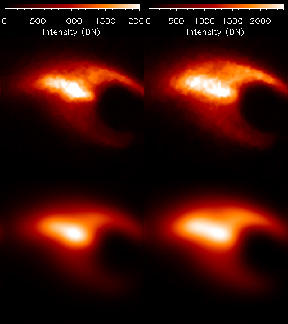
Figure 2 shows the results of the restoration for the images of a flare
observed on February 21, 1992 (Hara et al. 1992). The images were
taken through the thick aluminium filter and the berylium filter,
respectively, whose passbands are at higher energies than that of the thin
aluminium filter. Though the noise
components are suppressed in the dark areas to an extent, it seems the
blurred components still remain in the restored images. It must be related
to the fact that the scattering level considered in our study might be
underestimated.
It should be notified that the physical quantities
obtained from the dark regions on the restored image are very sensitive
to the consideration of the level of the scattering of the PSF.
Therefore, for a precise estimation of the physical parameters of
the solar corona,
especially for the dark regions around bright structures, it is necessary
to consider seriously the level of the scattering intensity.
This last point will be elaborated in our future papers.
REFERENCES
Agmon, N., Alhassid, Y. and Levine, R. D. 1979,
J. Com. Phys.,
30, 250
Hara, H., Tsuneta, S., Acton, L. W., Bruner, M. E.,
Lemen, J. R. and Ogawara, Y. 1994,
PASJ, 46, 493
Hollis, J. M., Dorband, J. E. and Yusef-Zadeh, F. 1992,
ApJ, 386, 293
Martens, P. C., Acton, L. W. and Lemen, J. R. 1995,
Solar Phys., 157, 141
Sakurai, T. and Shin, J. 1998,
Adv. Space Res., submitted.
Shin, J. 1998,
PhD Thesis, National Astronomical Observatory of Japan
Tsuneta, S. and 12 co-authors 1991,
Solar Phys., 136, 37
Yoshida, T. and Tsuneta, S. 1996,
ApJ, 459, 342